
The San Francisco Fire Department is launching emergency preparedness training this week as part of its Neighborhood Emergency Response Team (NERT) program. This is the final time NERT volunteer training will be offered this year. The goal of the training is to enable residents to be self-sufficient in a major disaster situation by developing multifunctional citizen teams, cross-trained in basic emergency skills, and leading to certification for Sunnyside’s emergency response team. Through attending this program, individuals will learn hands-on disaster skills that will help them as members of an emergency response team, preparing them to respond to a personal emergency or as an adjunct to the SFFD response.
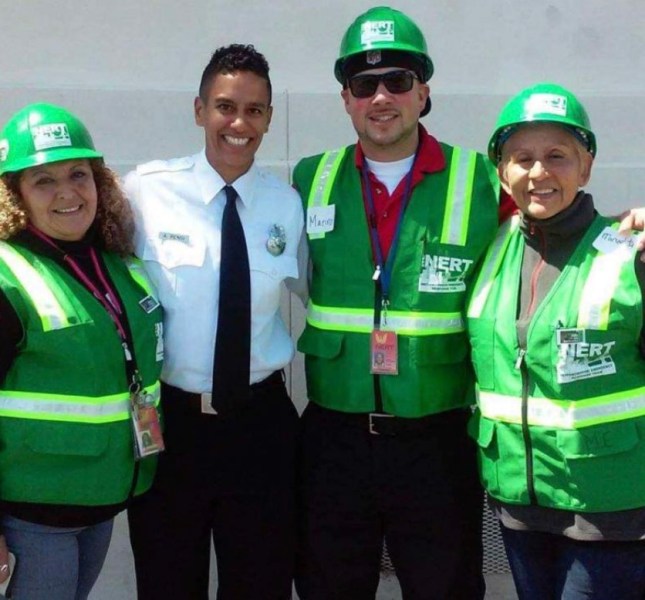
The training consists of six class sessions, each about four hours long. It is free to the public. Attendees who complete the classes and pass the final examination will be qualified to become Neighborhood Emergency Response Team (NERT) team members and will be eligible to attend advanced trainings, also offered by SF Fire.
Two sessions are being offered. All classes begin at 5:30 PM.
- Tuesday sessions, from June 10 to July 15. This session’s classes will take place at SF Fire’s training facility located at 2310 Folsom St (near 19th St., behind Station 7).
- Wednesday sessions, from June 11 to July 16. This session’s classes will take place at 145 Hooper St., on the campus of California College of the Arts.
How to register:
- Create a NERT account. Use this link to request an invitation that will be emailed to: SFFD NERT Member App.
- Click on the HOME tab and create your profile.
- Click on the Manage my NERT Profile and Events link.
- Click on the Events link.
- Click on Register and select either the Tuesday or Wednesday sessions. Then select all of the training dates using the checkbox. If you’re not a current NERT member, you’ll receive a message stating, “Recertification Classes are for NERTS only. Don’t worry: you will be registered to attend the training anyway, and will be eligible for NERT certification following the sessions.
The chart below lists the topics covered in each of the class sessions
| Class Session #1 | Light Search and Rescue Different types of construction and where to look for damage How to classify damaged buildings Building a marking system Interior search patterns Lifting heavy objects and the mechanical advantage Victim carries |
| Class Session #2 | Disaster Medicine Health considerations for the rescuer Opening airways Stopping bleeding and the shock position S.T.A.R.T. triage Minor injuries and burns |
| Class Session #3 | Light Search and Rescue Different types of construction and where to look for damage How to classify damaged buildings Building a marking system Interior search patterns Lifting heavy objects and mechanical advantage Victim carries |
| Class Session #4 | Skills Development and Application Final Exam Review Hands-On-Training Extinguishing fires Triaging and treating moulage victims Extricating a victim trapped by heavy timbers Interior search for reported missing persons Exterior building damage assessment Award of Achievement and course evaluation forms used in this class: Final Exam – pages 217-222 in your Student Participant Manual Volunteer Involvement Equipment Sign-out Course Evaluation |
| Class Session #5 | Team Organization and Management City Disaster Plan and where the NERTs fit NERT Incident Command System, managing the disaster Disaster Psychology |
| Class Session #6 | Basic Disaster Skills Natural gas, water, and electrical controls, why, when, and how to shut them off Types of fire, and using extinguishers to put it out Hazardous Materials awareness in the home, on the road, and all around you Terrorism Awareness |
 Sunnyside Neighborhood Association