Mass Vandalization of Slow Streets Signage in Sunnyside

UPDATE 1:00 PM: SFMTA has quickly replaced the signs at many of the affected intersections.

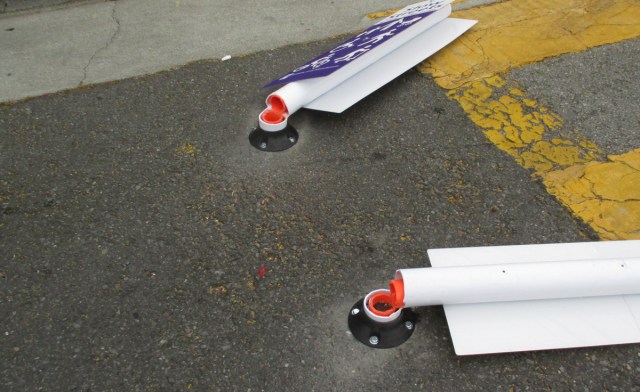
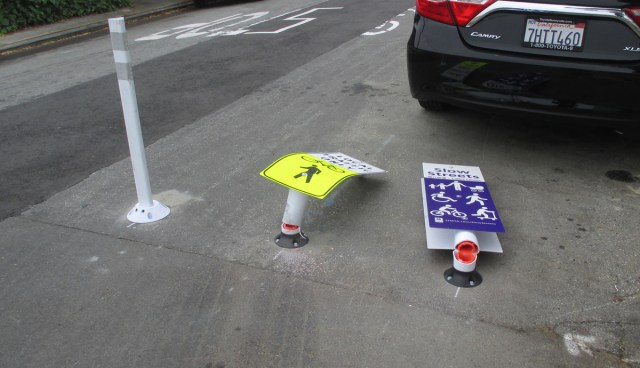
Last night at about 4:00 AM, in an act of systematic and wanton destruction, an unknown person cut down nearly every SFMTA Slow Streets sign that had been erected on Hearst Avenue over the preceding few days. Apparently using a power tool, 33 of the 36 newly installed signs were cut off at the base. Every one of the seven intersections on Hearst Ave. were impacted: Baden St., Congo St., Detroit, St., Edna St., Foerster St., Gennessee St., and Ridgewood Ave.

SFMTA has already begun to repair the damage done, and residents at the intersections with surveillance cameras are reviewing their record of the incident. The incident has been reported to SFMTA and Ingleside Police Station.

If you have information that can assist in identifying the perpetrator, contact Ingleside Police Station (415) 404-4000 or SFMTA Slow Streets at slowstreets@sfmta.com .
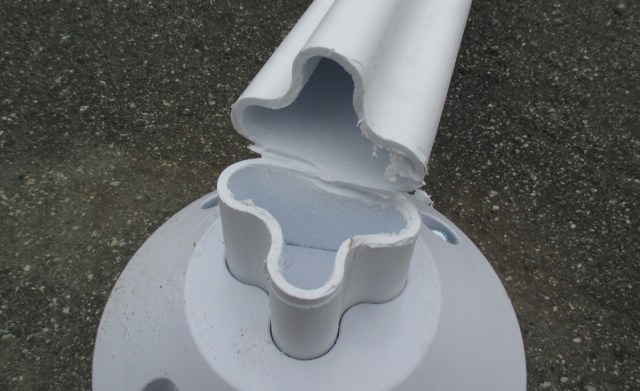
Surveillance video screen capture of the incident, 4:18 AM at Gennessee/Hearst.

Slow Streets signage on Hearst Avenue going in

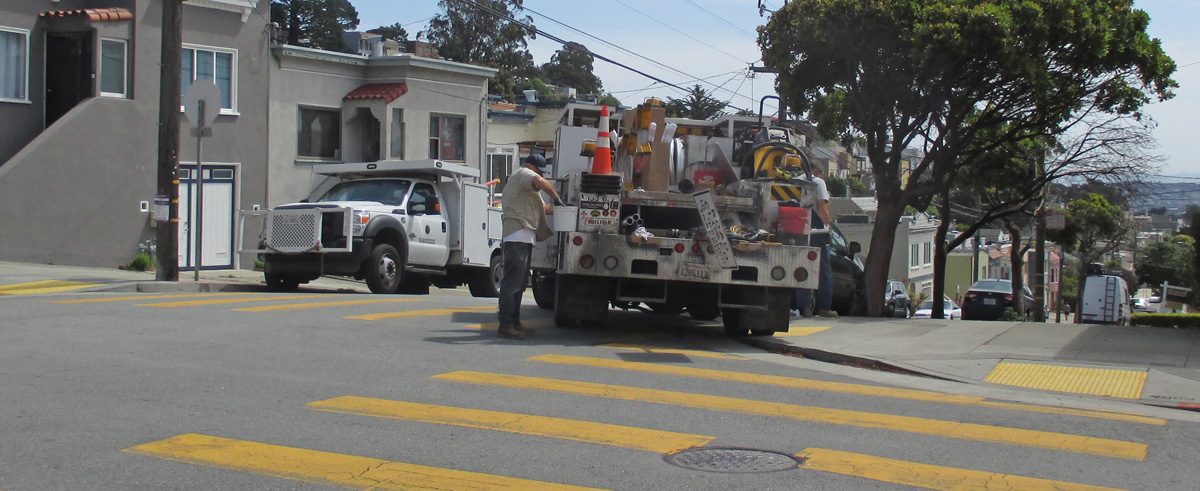
Today workers from the Dept of Public Works are installing the signage for Slow Streets on Hearst Avenue. As of midday, they have finished from Baden to Edna, which leaves Foerster to Ridgewood to be done. There are seven intersections total, and all will be well signed.

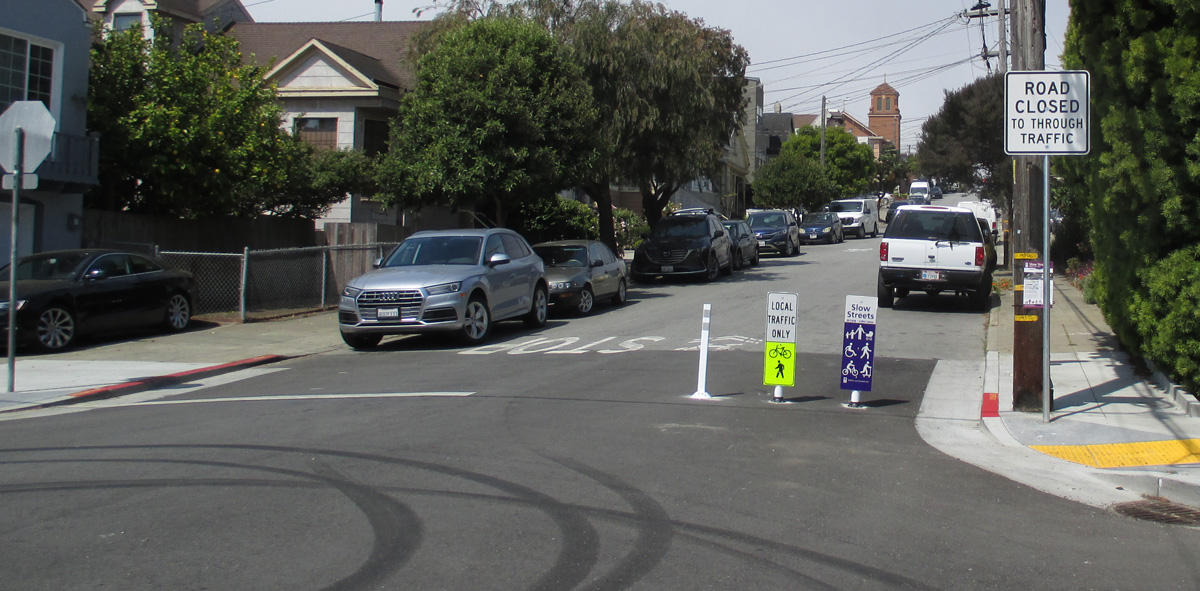
Detroit and Hearst. New Slow Streets signage. Photo: Sunnyside Neighborhood Association

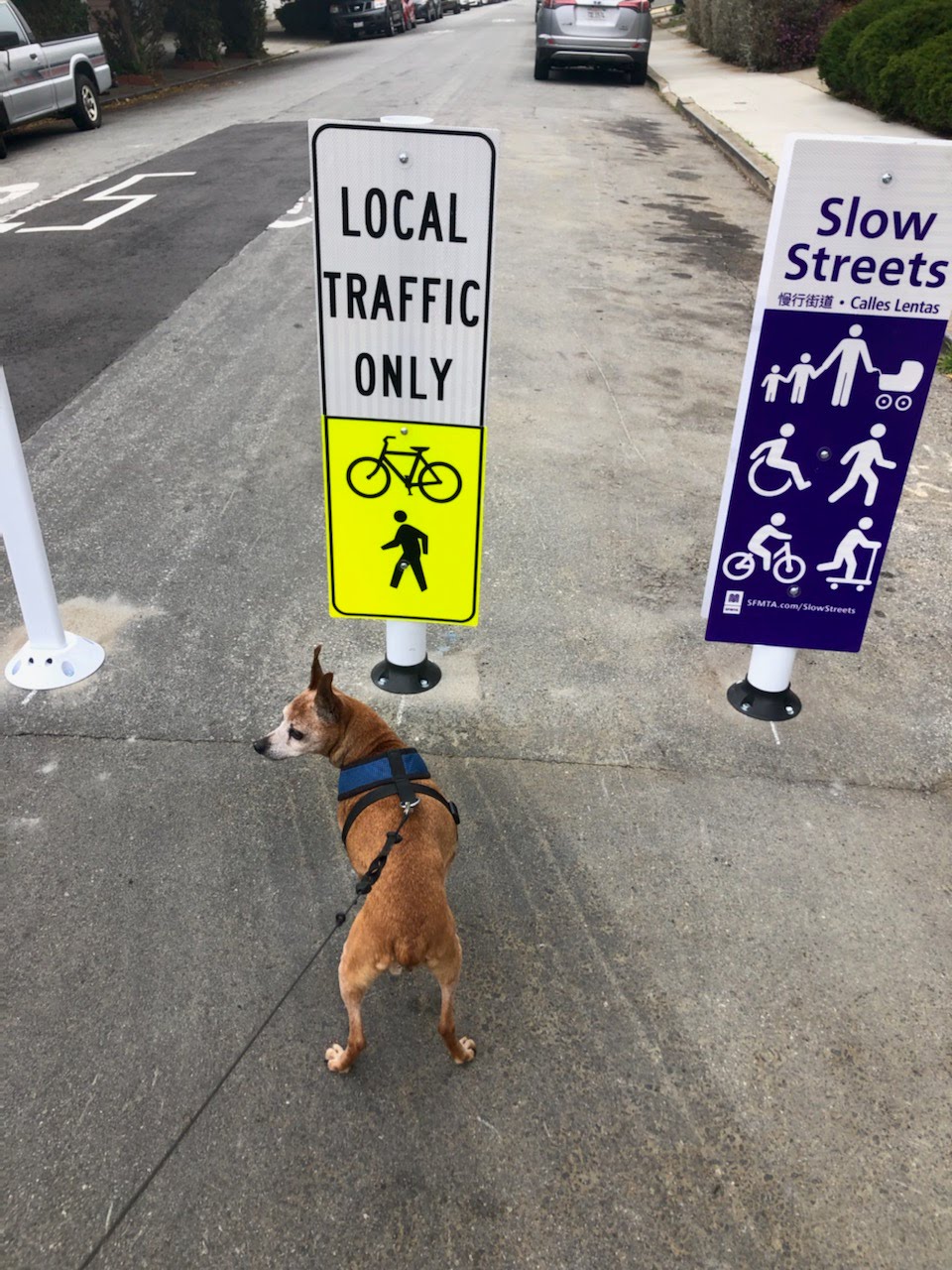
The signage has two parts, three plastic soft-hit posts on the roadway with signs attached, and a large “ROADWAY CLOSED TO THROUGH TRAFFIC” on a standard metal pole in the sidewalk. Local access by residents and visitors is not in any way prohibited. Families traveling to and from local schools are likewise not impacted by the program.

Edna and Hearst. DPW at work. Photo: Sunnyside Neighborhood Association

What is “Slow Streets”? From the SFMTA website:

The SFMTA’s Slow Streets program is designed to limit through traffic on certain residential streets and allow them to be used as a shared space for people traveling by foot and by bicycle. Throughout the city, nearly thirty corridors have been implemented as a Slow Street. On these Slow Streets, signage and barricades have been placed to minimize through vehicle traffic and prioritize walking and biking. The goal of the Slow Streets program is to provide more space for socially distant essential travel and exercise during the COVID-19 pandemic.

https://www.sfmta.com/projects/slow-streets-program
Isabel is checking out the new signs. Photo: Ken Hollenbeck
Continue reading “Slow Streets signage on Hearst Avenue going in”

Slow Streets for Hearst Ave. due to arrive next week

From SFMTA, an update about the long-awaited Slow Streets program for Hearst Avenue.

SFMTA will implement a Slow Street in your neighborhood next week. Hearst Avenue between Ridgewood Avenue and Baden Street was approved by the SFMTA Board to become a Slow Street back in Spring 2021. Due to a material shortage, the implementation of Lyon Street as a Slow Street had to be delayed until now.

The Slow Streets program aims to create pedestrian and bicycle priority streets that are calmer and allow for shared roadway usage between people walking, biking, rolling, exercising, or driving. The shared roadway facility is created by discouraging vehicle through traffic and encouraging slower vehicle speeds using traffic diverters and signage.

Slow Streets are not full street closures and local vehicle traffic, delivery/mail services, and emergency responders can still access the Slow Street.

Additionally, although Slow Streets are pedestrian and bicycle priority streets, pedestrians and bicyclists utilizing the Slow Street must yield the road to oncoming vehicles.

Please help inform community members in your neighborhood through your communication channels about the implementation of the Hearst Slow Street happening by the end of next week. I’ve attached a flyer for your reference that you can include in any messaging to inform community members.

For more information on the Slow Streets Program visit https://SFMTA.com/SlowStreets. If you have any questions, please email us directly at SlowStreets@sfmta.com.

Continue reading “Slow Streets for Hearst Ave. due to arrive next week”

Traffic Calming proposed for Staples Ave.

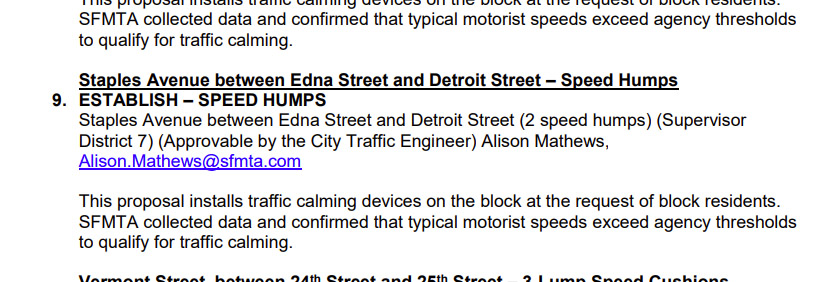
At the June 4, 2021, SFMTA Engineering Hearing: Speed humps are proposed for Staples Ave. between Edna and Detroit will be on the agenda. More about the meeting here.

Residents wishing to request traffic calming for their block can find out more here. Deadline for this cycle is June 30, 2021. Currently the petition requirement is being waived.

Excerpted from SFMTA agenda June 4, 2021. https://www.sfmta.com/sites/default/files/reports-and-documents/2021/05/ph_6_4_2021.pdf

Muni Announces New Bus Route for Sunnyside Connections

Muni has has announced that starting May 15, a new bus route will serve parts of Sunnyside. The new line, called the 36/52-Special, means the return of portions of two routes that were suspended during Covid-19 core service. It combines parts of 36-Teresita and 52-Excelsior, and operates in loops between Forest Hill Station and Sunnyside. The new line marks the return of the second of the three routes that Sunnyside lost during Covid-19 changes; the 43-Masonic was restored several months ago, but the 23-Monterey remains suspended.

https://www.sfmta.com/sites/default/files/pdf_map/2021/05/36-52_special_pdf_map.pdf

The new line will operate from 8 AM to 8 PM daily. The map shows arrows going only clockwise, but the line also operates counterclockwise. There is an extra loop up Clarendon for the clockwise route.

Here is the Muni page for the new bus. Here is a full description of the route:

Continue reading “Muni Announces New Bus Route for Sunnyside Connections”